

The Radical Normality of Peace:Non-Violence on the Wayfarer
Science fiction often features situations where characters resort to violence “because they had to”. Pirates board our ship, a crew member gets kidnapped, alien beasts are charging, we run into a brutal empire, we run into a group of thugs… The list goes on. But the bottom line always seems to be: Set the lasers blaring! Which unfortunately also means: Get people killed. But “we had no choice.”
Convention seems to suggest that in adventurous worlds, violence isn’t just an option—it’s the only realistic survival strategy.
But is it really?
In her best-selling and award-winning Wayfarers series—especially her debut novel, The Long Way to a Small, Angry Planet—Becky Chambers performs a quiet, radical subversion of the genre. She builds on scenarios that form the bread and butter of classic space opera and then proves that there is an alternative—one that is both more humane and, surprisingly, much more realistic. Becky presents us with a parade of sci-fi’s most beloved life-threatening situations, and then, each and every time, lets the characters make their way out without any weapons at all.
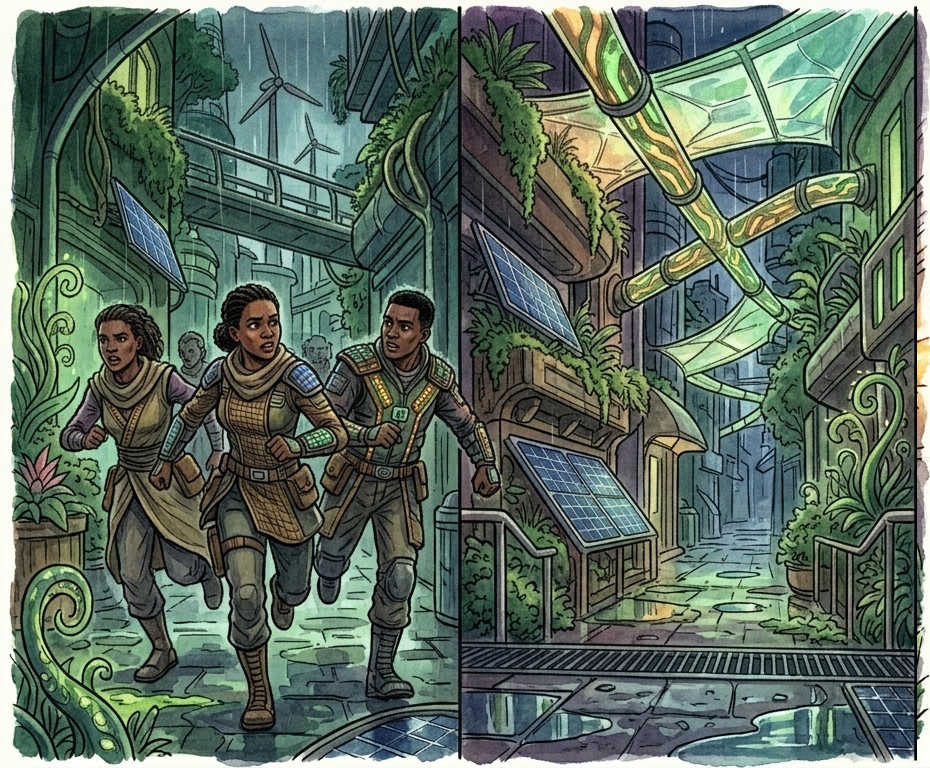
Superpowers
Please note: Her characters are normal people, like you and me. They are clerks, pilots, and cooks. They are intelligent, nice and special—like you and me. But they are no superheroes, and they are not faster, stronger, or more powerful than anyone else (which is probably why they do not fight off three pirates with one hand and five guards with the other, as other fictional characters are wont to do).
These normal people can’t super-fight. What they can do is run, hide, negotiate, search for loopholes, or come back later. What a sensible thing to do! And it does not even involve bloodshed.
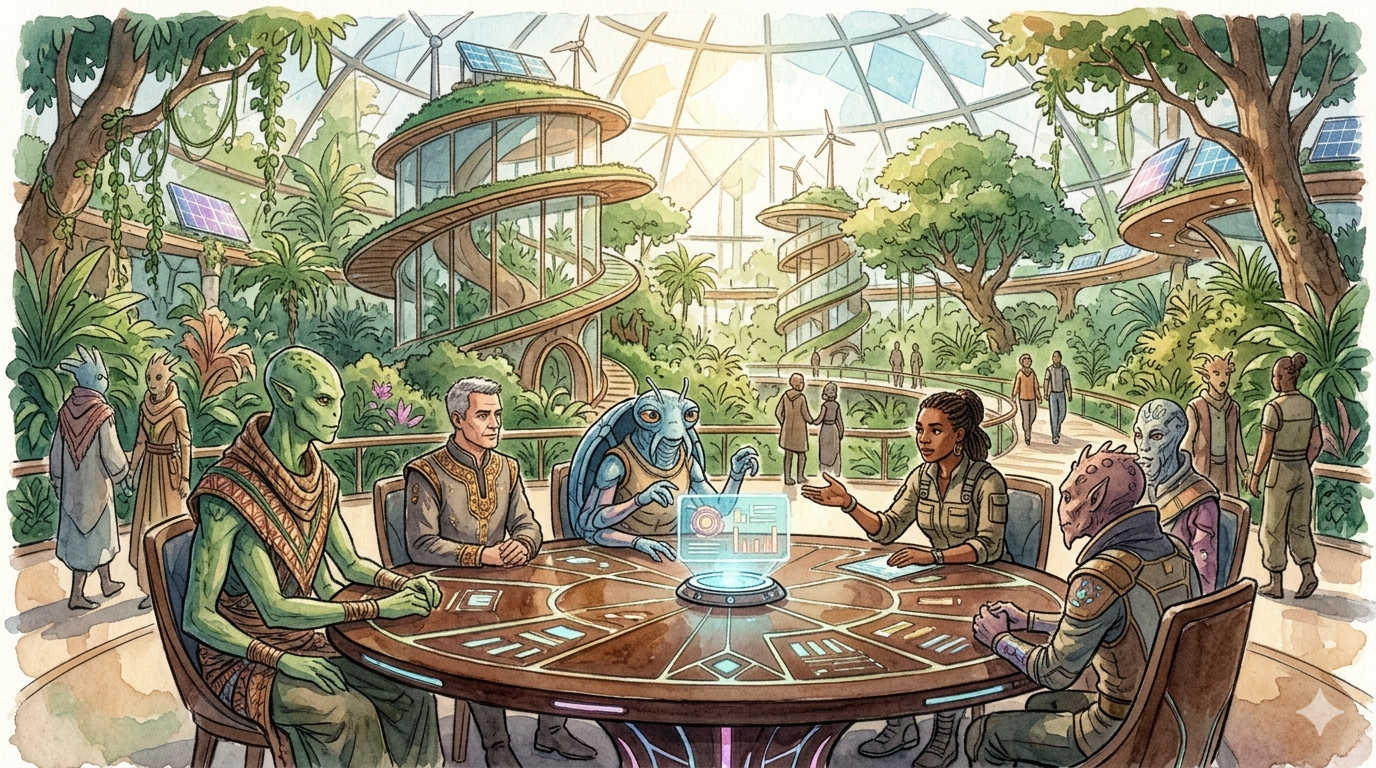
Negotiations
Their moves involve technical hacks, or building protective shelters. And sometimes, they involve being able to relate to the very person who is pointing a gun at you. For even they, as Becky shows us, have backstories, motives, and reasons, and even they have legitimate needs such as wanting to live. They go about it in absolutely the wrong way, namely the the violent, brutal way, but we still have to talk to them in order to talk our way out.
Only once we find common ground with the villains can we build bridges to walk away on. With a rigid, authoritarian empire, that common ground may be the rule of law—because those bureaucrats really do believe in rules and regulations. The thugs, on the other hand, who really don’t believe in rules and regulations, may have their own sense of fairness. If we ask nicely, they might just leave us enough to survive on for our journey home.
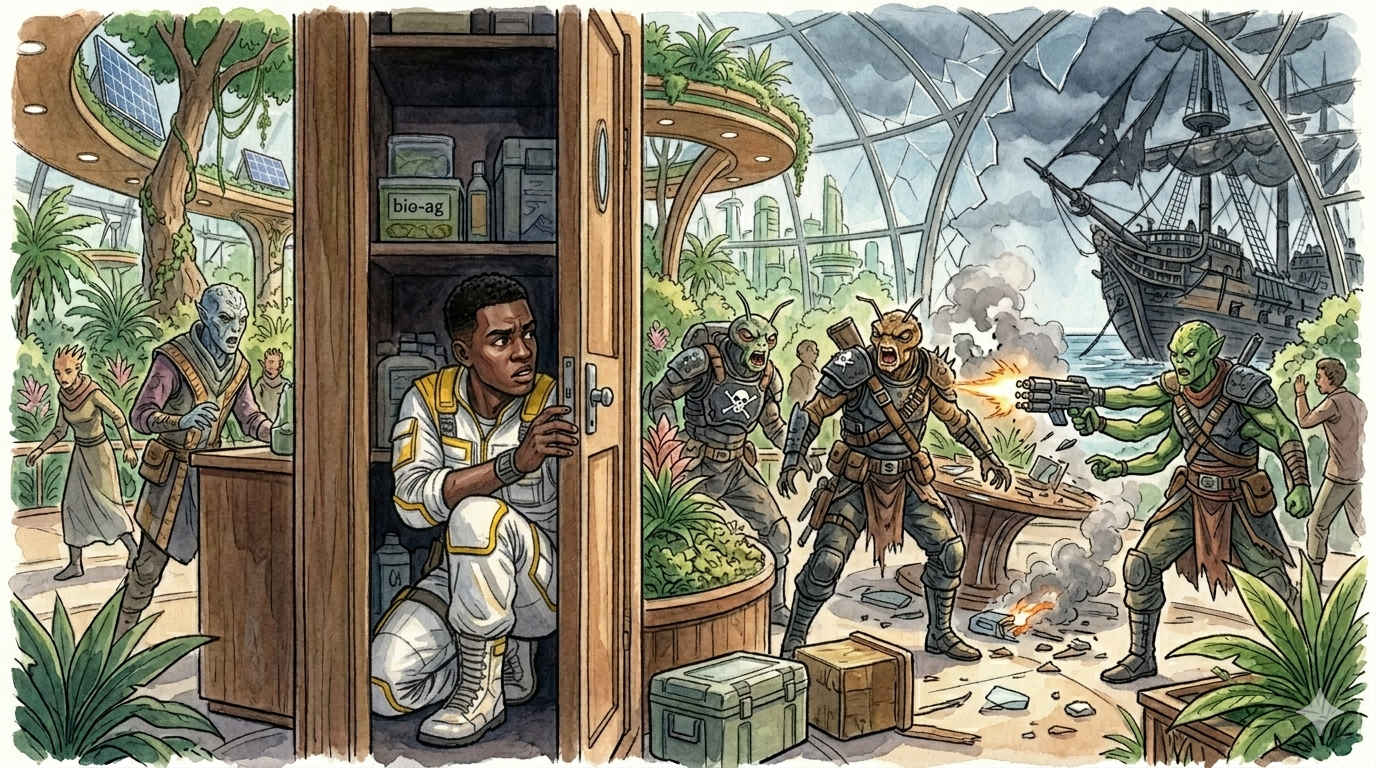
Nightmares
The Wayfarer’s non-violent solutions work, in the sense that everyone survives, which is the most important thing after all. But that does not mean that there is no cost. Damage to the ship, loss of supplies—yes, that needs to be taken of. But there is another legacy that hits really hard: People got scared. Having a gun pointed at you is not some cool adventure, it’s a traumatizing event. Surviving that does not turn you into a stoic badass, it turns you into someone who needs time to heal.
People in Becky’s novel walk away with inner wounds in a very realistic manner. Not everybody is affected, and not everybody in the same way. One person may be totally level-headed in one kind of calamity, yet deeply traumatized by another. Insomnia and nightmares may ensue, or restlessness and panic attacks. The human psyche is a complex and delicate thing; we need to be patient and attentive, mindful and gentle to allow it to heal.
Bodhisattvas
So here’s another way in which the Wayfarer characters are ordinary people like you and me: they get scared, and they get hurt.
Also, they are not Jesus, nor Buddha, nor some amazing saint. They have not taken a vow of non-violence, especially not one that makes non-violence sound like some extreme or unlikely quest. Peacefulness is not a special calling in Becky’s novels, nor is it reserved for the Chosen Ones. Anyone can do it. (In fact, most everyone is doing it in real life, most of the time.)
So while I personally think more stories of Bodhisattvas would be wonderful and something the world truly needs, I also feel that presenting the very ordinariness of non-violence is a big contribution to make.
After all, when we step back and look at our own world, Becky’s “radical” pacifism starts to look a lot like just common sense. Newsfeeds may immerse us in images of war, yet the reality is that the vast majority of countries are currently not at war. Despite unclear borders, trade conflicts, and diplomatic friction, most states manage to coexist without throwing bombs at one another.
On an individual level, too, we usually manage to coexist even with a neighbor we don’t love. Whether it’s the one who turns the music up loud, the one who gets bossy at work, or the one who pushes our buttons at each and every family reunion: we may scoff or bicker, but we usually don’t stoop to physical assault.
Becky’s novels remind us that we are already quite experienced at non-violent conflict resolution. By stripping away the “necessity” of violence in fiction, she holds up a mirror to our own lives, suggesting that we ordinary human beings are able to find our way to the stars in the sense of our highest ideals, and also to find our way home to ourselves.
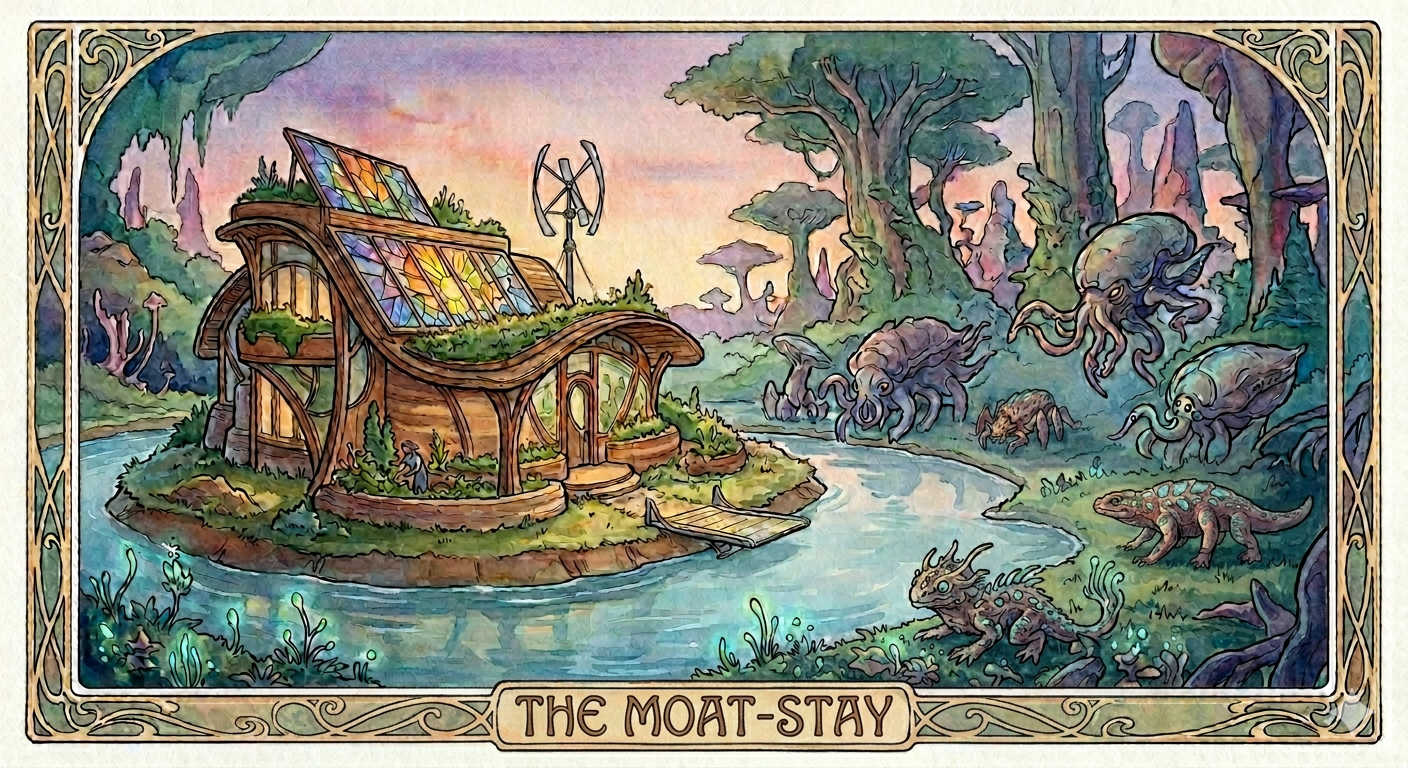
PS. Recommendations
I heartily recommend The Long Way to a Small, Angry Planet as a great example of how common tropes about violence can be turned around.
I likewise recommend the third Wayfarer book, Record of a Spaceborn Few, as a great example of a utopian novel.
As always, I am happy if you drop me a line
and / or subscribe to my newsletter below:
Not Glorified or Trivialized: Navigating Violence
Of course we do not wish to glorify brutality, but is the mere depiction of violence not a...

Crime Stories with a Heart: What if Healing Came First?
What if healing and reparations were our main response to the hurt that crimes cause?

Fantasy: Utopian, Kind, Visionary?
Utopia not as a rigid blueprint, but as a dreamlike intuition, a hint, the tempting call of a wiser world... Can fantasy give us that?